Best Ads Platforms for Digital Marketing Agencies

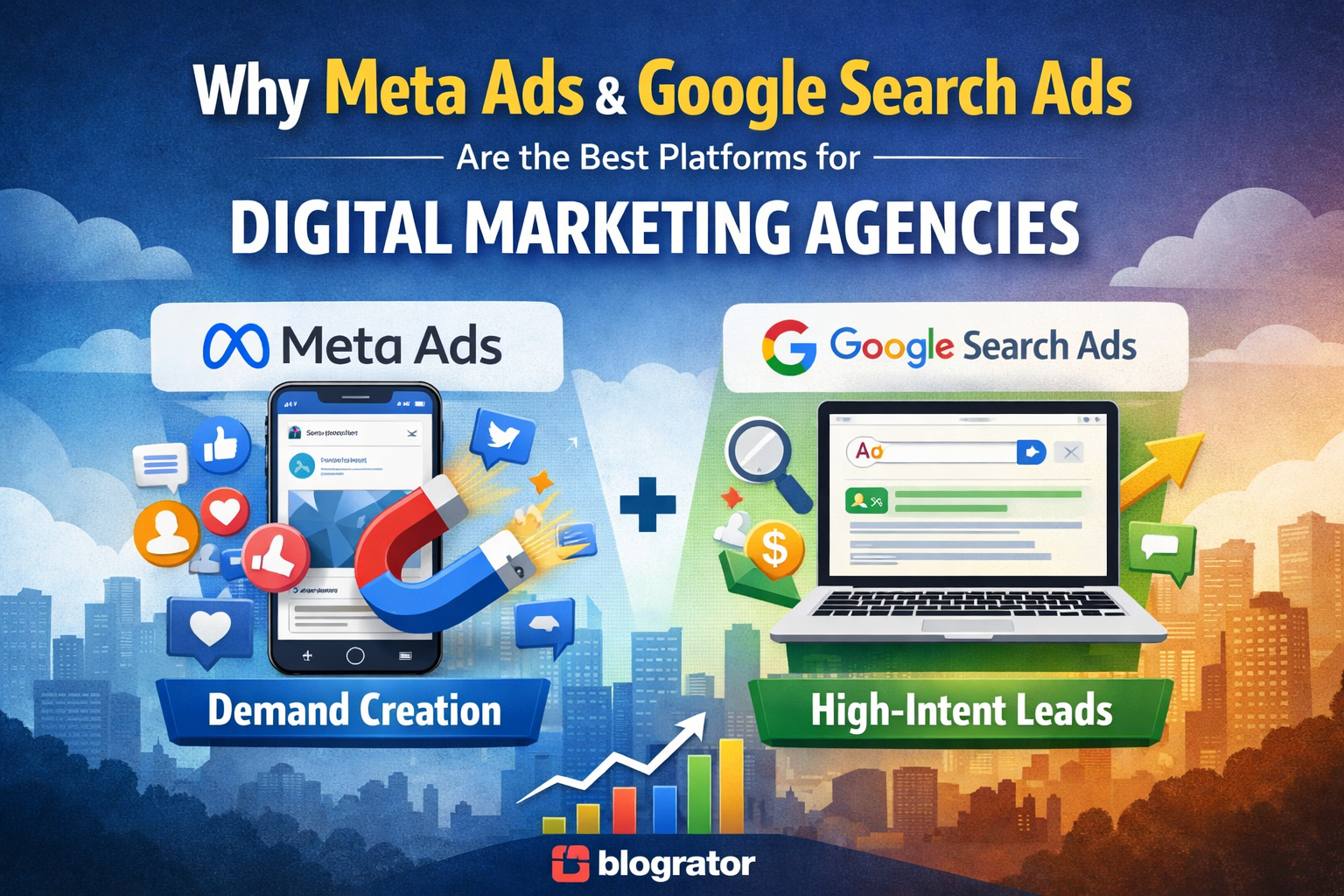
Best Ads Platforms for Digital Marketing Agencies are those that consistently bring in leads, scale predictably, and clearly show ROI. From my experience working with businesses of all sizes, two platforms rise above the rest: Meta Ads and Google Search Ads. This article breaks down why these platforms outperform others for digital marketing agencies — covering the entire journey from awareness to conversions. What Makes an Ad Platform “Best” for Agencies An ad platform is only as good as the results it delivers. For agencies, the ideal platform checks three boxes: Reliable lead generation High conversion potential Scalability without unpredictable cost spikes Meta Ads and Google Search Ads hit all three. They work together like a two-stage engine — one creates demand, the other captures it. Meta Ads: Demand Creation and Scalable Audience Reach Meta Ads — the ecosystem behind Facebook and Instagram — excels at demand creation. For clients who aren’t being actively searched yet — like local services, coaches, or newer brands — Meta Ads allow agencies to: Target audiences based on interests, behaviors, and demographics Use engaging formats like image, video, and carousel ads Build retargeting audiences quickly Capture leads through optimized forms without clicks to external pages This means agencies can help brands generate inquiries even before search intent develops. That’s powerful for consistent lead flow. Meta’s strength is in building awareness and demand, making it easier to nurture audiences and turn them into prospects. Google Search Ads: Capturing High-Intent Leads If Meta Ads create demand, Google Search Ads capture it. When someone types a query like “digital marketing agency near me” or “best Facebook ad expert,” they’re already in buying mode. That intent is what makes Search Ads incredibly effective: You reach users with a problem and a clear intent to solve it Leads tend to convert at higher rates because they’re actively searching ROI tracking is easier because actions are directly tied to conversions Google Search Ads are especially useful for: Local businesses B2B lead generation Services with defined needs and urgency Unlike broader awareness campaigns, Search Ads pull in users who are already decision-focused. Why These Two Platforms Work Best Together Using Meta Ads and Google Search Ads in tandem is where agencies see the biggest impact. Meta Ads help warm up an audience and build a pool of potential customers. Google Search Ads then capture intent-driven traffic when that audience (or similar ones) are ready to act. Together, they: Improve conversions through retargeting Reduce dependency on a single platform Offer data advantages for optimizing across campaigns This combination gives agencies predictable systems that clients can understand and trust. What About Other Platforms? Platforms like LinkedIn, TikTok, Snapchat, or Pinterest have their uses — but for most agencies, they are secondary options: LinkedIn: Strong for enterprise B2B but expensive and slower to optimize TikTok: Creative-heavy, great for brand awareness but less predictable for leads Other social platforms: Niche audiences that aren’t always aligned with client goals For agencies serving a wide range of clients — especially small to mid-sized businesses — Meta + Google Search remains the foundation. Final Take: Solid Strategy Beats Fads Ad platforms evolve rapidly. New features, AI tools, and audience targets shift. Yet the basic flow of creating awareness + capturing intent stays the same. Meta Ads and Google Search Ads are not just popular tools — they’re strategic platforms that help agencies generate scalable, trackable, and cost-effective results. By integrating both into your service offerings, you build robust campaigns that speak to audiences at every stage of the customer journey.


Read More

What is GoHighLevel CRM – Complete Guide

In the world of business, customer relationship management (CRM) tools are essential for maintaining strong relationships, tracking sales, and ensuring customer satisfaction. One such powerful tool gaining popularity among businesses of all sizes is GoHighLevel CRM. This all-in-one platform is designed to streamline various business processes, from lead generation to marketing automation, helping companies maximize their efficiency and grow their customer base. In this blog, we’ll explore what GoHighLevel CRM is, how it works, and why businesses are increasingly adopting it for their customer management and marketing needs. What is GoHighLevel CRM? GoHighLevel CRM is a cloud-based customer relationship management platform that provides businesses with a wide array of tools for managing customer interactions, automating marketing workflows, and handling sales processes. Unlike traditional CRMs, which often focus primarily on contact management and sales tracking, GoHighLevel integrates several functionalities, such as: Lead management Email and SMS marketing automation Funnel building Appointment scheduling Sales pipeline tracking Customer surveys and reviews The platform is designed to consolidate all these tools into one place, making it easier for businesses to manage their customer relationships, marketing campaigns, and overall growth strategy. Why GoHighLevel CRM Matters In today’s competitive business landscape, staying connected with customers and leads is crucial. GoHighLevel CRM helps businesses automate processes, saving valuable time and resources. Here’s why it matters: 1. All-in-One Solution Instead of using multiple software programs for different aspects of customer management, GoHighLevel provides a single platform that handles everything from lead generation to customer support. This reduces complexity, ensures consistency, and saves time. 2. Improved Customer Experience By automating follow-ups and providing personalized communication, GoHighLevel helps businesses engage customers more effectively, improving customer satisfaction and loyalty. 3. Increased Efficiency With automated workflows, businesses can reduce manual tasks and focus more on high-value activities like sales and customer service. This leads to better resource management and improved productivity. Key Features of GoHighLevel CRM GoHighLevel brings all your core tools into one platform so you can automate, streamline, and scale your business more easily. Here’s how: A. Marketing Automation GoHighLevel allows businesses to automate marketing campaigns via email, SMS, and even voice drops. This includes: Drip campaigns Automated follow-ups Multi-channel messaging These tools help businesses stay in touch with leads and customers without manual intervention, improving lead nurturing and conversion rates. B. Sales Funnel Building GoHighLevel includes a powerful funnel builder that enables businesses to create custom sales funnels without needing coding knowledge. These funnels can be designed for various purposes, such as: Lead generation Product sales Event registrations The funnel builder makes it easy to design effective and visually appealing funnels that guide customers through the sales process. C. Appointment Scheduling With built-in appointment scheduling tools, GoHighLevel makes it easy to schedule calls, meetings, and consultations with leads and clients. The platform integrates with calendars, automates reminders, and syncs appointments, ensuring that no appointments are missed. D. Integrated CRM Functionality The CRM component of GoHighLevel helps businesses manage customer data efficiently. You can track leads, organize contact information, and monitor interactions. This allows you to understand your customers better and tailor communications to their needs. E. Review and Reputation Management GoHighLevel includes tools to collect and manage online reviews. The platform automates the review request process, helping businesses gather positive feedback and improve their online reputation. Benefits of Using GoHighLevel CRM GoHighLevel brings your tools, data, and teams into one streamlined platform so you can manage leads, marketing, and clients more efficiently. Centralized Data Management: All customer data lives in one place, making it easier to track interactions, manage leads, and follow up. Cost-Effective: GoHighLevel replaces multiple tools with one platform, cutting software costs and simplifying operations. Customizable Workflows: You can build automations tailored to your business—from lead capture to follow-up—across the entire customer journey. Enhanced Collaboration: Sales, marketing, and support teams share the same data, improving coordination and communication. In short: GoHighLevel helps you run your business smarter—not harder—by centralizing systems, saving money, and keeping your entire team aligned. Challenges to Consider While GoHighLevel CRM offers a wide range of benefits, there are some challenges to consider: Learning Curve: With so many features, GoHighLevel can feel overwhelming at first, but its training resources help you get comfortable quickly. Customization Limits: The platform is flexible, but ultra-specific or unusual workflows may still face some constraints. Integrations: Connecting GoHighLevel with other tools may require extra setup and configuration. While there are a few hurdles to consider, most businesses find that the long-term gains in automation, organization, and growth far outweigh these initial challenges. Learn more about Blogrator GoHighLevel services. How to Get Started with GoHighLevel CRM To get started with GoHighLevel CRM, businesses typically follow these steps: Sign Up: Choose a plan that fits your business size and needs. Set Up Your Account: Customize the platform to reflect your business processes, including creating pipelines, workflows, and automations. Integrate Other Tools: If necessary, integrate GoHighLevel with other software like email platforms, payment gateways, or social media accounts. Launch Campaigns: Start using the marketing automation, sales funnel, and CRM features to engage with customers and grow your business. With its ease of use and robust features, GoHighLevel is designed to be an invaluable tool for businesses of all sizes looking to improve their customer management and marketing efforts. Conclusion GoHighLevel CRM is a comprehensive platform designed to help businesses streamline their customer management, automate marketing efforts, and improve sales processes. With its all-in-one features and robust automation tools, it’s an excellent choice for businesses looking to enhance their customer relationships and grow their bottom line. By understanding how GoHighLevel CRM works and applying it to your business, you can increase efficiency, improve communication, and drive better results. If you’re interested in learning more about GoHighLevel CRM and how it can benefit your business, visit Blogrator Web Service for more insights.

Read More

Mobile-First Web Design: Boost Lead Generation

In today’s digital landscape, mobile devices have overtaken desktops as the preferred method for accessing websites. This shift has made mobile-first web design a crucial strategy for businesses looking to optimize user experience, capture leads, and drive conversions. But what exactly is mobile-first web design, and why is it so important for lead generation? Let’s explore this essential approach to building websites that not only look great on mobile but are also designed to engage users and turn them into loyal customers. What is Mobile-First Web Design? Mobile-first web design is an approach where websites are initially designed and optimized for mobile devices, then adapted to larger screens, such as tablets and desktops. This method prioritizes mobile user experience by focusing on fast loading times, simplified navigation, and clear, easy-to-use interfaces. As more people browse websites on smartphones and tablets, mobile-first design ensures that your site meets users where they are, making it essential for businesses looking to generate and capture leads effectively. Why Mobile-First Web Design Matters for Lead Generation A mobile-first approach ensures the best user experience, regardless of device. For lead generation, this means quicker load times, easy navigation, and a smooth journey from visit to conversion. Here’s why mobile-first design is crucial: Enhanced UX: Clean, mobile-first layouts reduce clutter, help users find info faster, and keep them on-site longer. Faster Load Times: Speed-optimized pages load quickly, cutting drop-offs and boosting form fills/purchases. Increased Conversions: Mobile-friendly CTAs and lead forms make it easy to take action, improving conversions. Higher Engagement: Better mobile experience drives more reading, video views, and newsletter sign-ups—creating more leads. In short, mobile-first design improves experience, speed, and clarity—so visitors don’t just browse, they convert. When your site feels effortless on mobile, trust grows, and leads follow. Key Elements of a Mobile-First Design for Lead Generation To effectively use mobile-first web design for lead generation, there are several critical components you should consider: A. Responsive Design Responsive design ensures your website adapts seamlessly to various screen sizes and orientations. This ensures an optimal experience across all devices, from smartphones to desktops, making your site user-friendly and accessible no matter what device visitors use. B. Simple and Clear Navigation Simplicity is crucial for mobile-first design. Visitors should quickly find key information without unnecessary distractions. Streamlined navigation and a clear focus on important actions—such as filling out forms, subscribing to newsletters, or making inquiries—will improve user experience and encourage engagement. C. Fast Loading Speed Mobile users expect fast, responsive websites. Research shows that if a page takes more than 3 seconds to load, users are likely to abandon it. Mobile-first web design reduces loading times by optimizing images, compressing files, and eliminating unnecessary elements, ensuring a smoother experience and reducing bounce rates. D. Optimized Lead Capture Forms Lead capture forms are essential for conversions. On mobile devices, these forms must be short, easy to fill out, and accessible. Minimize the number of fields and make buttons large enough for easy tapping to ensure a hassle-free experience for visitors. E. Clear Call-to-Action (CTA) A strong, easily visible CTA is essential for converting visitors into leads. Whether it’s a “Contact Us” button or “Get Started” form, your CTA should stand out and be easy to click, guiding users from interest to action seamlessly. By focusing on these elements, mobile-first design ensures an engaging, conversion-friendly experience. Benefits of Mobile-First Web Design for Lead Generation A mobile-first website isn’t just about looking good on phones—it directly impacts how people find you, trust you, and take action. 1) Improved SEO Google’s mobile-first indexing means that the mobile version of your website is used to determine rankings. Mobile-optimized websites have a better chance of ranking higher in search engine results, resulting in increased visibility, more traffic, and ultimately, more leads. 2) Increased Reach With the majority of internet users browsing on mobile devices, having a mobile-first website increases your reach. You’ll ensure that your website is accessible to the largest audience possible, providing a better chance for generating quality leads. 3) Better Customer Retention An optimized mobile site makes it easier for customers to engage and stay connected with your brand. This improved experience increases the likelihood that visitors will return, engage further, and convert into leads over time. 4) Competitive Advantage With many businesses still focused on desktop-first designs, adopting a mobile-first approach gives you a competitive edge. Customers appreciate a site that works seamlessly on their devices, and a mobile-friendly design sets you apart from competitors who haven’t yet optimized their sites for mobile. In short, mobile-first design helps you get discovered faster, serve more people, and convert them with less friction—giving your brand a clear edge. Learn more about Custom Web Development Services. Challenges of Mobile-First Web Design While mobile-first design offers numerous advantages for lead generation, there are a few challenges to consider: Content Prioritization: Since mobile screens are smaller, it’s essential to prioritize content carefully. Decide which information is most important to visitors and highlight it. Complexity in Design: Designing for both mobile and desktop is tricky because you must balance usability, features, and visuals across different screen sizes. When you plan content clearly and design with flexibility, you create a smooth experience on every device—without confusing or overwhelming users. Conclusion Mobile-first web design isn’t just a passing trend; it’s a crucial strategy for businesses looking to generate leads in today’s mobile-driven world. As more and more people rely on their smartphones to browse and shop, businesses that prioritize a mobile-first approach are seeing better user experiences, faster load times, and higher conversion rates. By keeping things simple, clear, and efficient, you can create a website that grabs the attention of mobile users and turns them into valuable leads. Embrace mobile-first design to set your website up for success and stay ahead of the competition. Need help bringing your vision to life? At Blogrator Web Service, we specialize in creating custom web designs that work for your business. Let’s get started today!

Read More

Progressive Web App Creation: Boosting Speed and Engagement

In today’s fast-paced digital world, progressive web app creation is essential for businesses aiming to stay competitive. Progressive web apps (PWAs) combine the benefits of websites and mobile apps, offering fast load times, smooth performance, and engaging user interfaces. PWAs work across all devices, helping businesses maintain a consistent digital presence that drives engagement and customer loyalty. This article will explore PWA development, its importance, and how businesses can use it to enhance online interactions. What Is Progressive Web App Creation? Progressive web app creation involves developing web apps that function like native mobile apps but run through a browser. Instead of downloading from app stores, PWAs are installed directly from a website, offering smooth performance. Built with HTML5, CSS, and JavaScript, PWAs provide app-like navigation, offline access, push notifications, and fast load times. As users prioritize speed and convenience, businesses that invest in progressive web app creation can offer app-like experiences, leading to lower bounce rates, longer session times, and improved user satisfaction, especially on mobile devices. Why Businesses Need Progressive Web Apps Progressive web apps (PWAs) provide better usability and engagement than traditional websites. Users can access app features directly without needing to download from an app store. PWAs load quickly, even on slow networks, thanks to service workers that cache key resources, ensuring fast and reliable interactions. PWAs also encourage return visits with features like home screen icons and push notifications, helping businesses stay connected with users without relying on email or social media. This consistent visibility enhances brand recall and boosts user retention. Finally, these app creation streamlines development by allowing businesses to create a single PWA that works across all platforms, removing the need for separate Android and iOS apps. This efficiency accelerates time to market and provides a consistent user experience. Key Features of Progressive Web App Creation When building a progressive web app (PWA), developers focus on key features that enhance the user experience: Responsive Design: PWAs automatically adjust to different screen sizes, ensuring a consistent experience across mobile, tablet, and desktop devices. Offline Access: Service workers enable PWAs to function even without internet connectivity, allowing users to continue browsing in areas with low or no connection. App-like Navigation: PWAs offer smooth, intuitive navigation with seamless transitions and simplified menus, making them feel like native apps. Push Notifications: Businesses can send timely updates directly to users’ devices, driving return visits and improving conversions. Secure Delivery: PWAs use HTTPS to ensure secure, trustworthy interactions and maintain data integrity. Together, these features make progressive web app creation a powerful tool for enhancing digital engagement, meeting user expectations, and achieving business objectives. Who Should Adopt Progressive Web App Creation? Almost every industry can benefit from progressive web apps (PWAs), but some businesses can gain the most: E-commerce brands are aiming for higher conversions and reduced cart abandonment rates. Media and content platforms are seeking faster access and push-driven updates. Service-based businesses that need interactive, offline-ready tools. Startups and innovators looking to offer app-like experiences without the heavy development overhead. Since PWAs eliminate the need for app marketplace dependence, businesses can launch quickly, make fast updates, and reach a wider audience without being constrained by strict app store policies. How to Approach Progressive Web App Creation To successfully implement progressive web app creation, businesses must align their strategy, design, and development practices. Here are the essential steps to follow: Define Clear Goals: Identify the user problems the PWA will solve, such as faster browsing, easier access, or offline usability. Outline Feature Priorities: Determine the essential features, such as push notifications, offline modes, or a simplified interface. Build with Modern Technologies: Use service workers, web manifests, and responsive design to ensure complete PWA functionality. Test Across Devices: Ensure the PWA works seamlessly across various screen sizes and operating systems for consistent performance. Monitor and Improve: Leverage analytics tools to track engagement, loading times, and user behavior, then make improvements based on data. By following this structured approach, businesses can maximize the effectiveness of these app creation and create user-centric experiences that drive engagement and satisfaction. Real‑World Impact: Engagement and Conversion Companies that implement progressive web apps (PWAs) often experience noticeable improvements in engagement and conversions. Since PWAs load quickly, users tend to stay longer and interact more with the content. This increased engagement boosts the chances of completing desired actions, such as form submissions or purchases, compared to traditional websites that load more slowly. Additionally, push notifications help drive user retention and encourage return visits without the need for costly digital ads. As a result, progressive web app creation enables businesses to keep users engaged with seamless, native-like experiences that are fast, reliable, and frictionless. Learn more about Custom web development services. Future Trends in Progressive Web App Creation <span style=”font-weight: 400;”>The digital landscape is increasingly focused on delivering faster, more adaptive user experiences. As a result, progressive web apps (PWAs) are set to play an even more significant role in future technologies, particularly as mobile usage continues to lead web traffic. Innovations like machine learning, AI integrations, voice interfaces, and advanced automation will further enhance PWAs, offering more personalized and immersive user experiences. As users demand seamless, intelligent, and fast interactions, early adopters of progressive web app creation will gain a competitive edge. Businesses that prioritize performance, engagement, and accessibility will capture a larger market share and foster stronger customer relationships. Conclusion In conclusion, progressive web app creation offers businesses a powerful solution to combine the extensive reach of the web with the speed and engagement of mobile apps. With features like offline access, faster loading times, and enhanced search visibility, PWAs deliver significant improvements in user experience and overall digital performance. As businesses continue to focus on seamless, mobile-ready experiences, progressive web apps will remain a vital strategy for digital growth. For companies looking to enhance their online presence and explore innovative digital solutions, Blogrator Web Service offers expert web and digital services, including PWA development and SEO-optimized web design. 

Read More

High-Converting Landing Pages for Paid Search Campaigns

Paid search campaigns generate immediate traffic, yet traffic alone does not deliver results. Instead, performance depends on how effectively a landing page captures intent and guides visitors toward action. Therefore, high-converting landing pages focus on clarity, relevance, and momentum rather than visual noise or broad messaging. When each section answers a specific user question, paid clicks turn into measurable outcomes instead of wasted spend. Landing pages play a strategic role in campaign success because they sit between promise and proof. As a result, businesses that treat landing pages as conversion tools rather than design assets consistently achieve stronger lead quality and lower acquisition costs. Understanding Intent Behind Paid Search Clicks Every paid search click carries intent shaped by the exact keyword phrasing, the promise made in the ad, and the user’s situation at that moment. Consequently, a landing page must reflect that intent immediately, because the visitor starts “judging” in the first few seconds. When visitors see familiar language and aligned outcomes, they stay engaged longer, and they feel confident that they landed in the right place. Moreover, intent changes by funnel stage, so a “pricing” search expects clear cost signals, while a “services near me” search expects location confidence and quick contact options. Therefore, you should match the page headline, subheadline, and first proof block to the same expectation your ad created, so users do not feel any disconnect. Searchers who click ads usually want direct solutions, not exploration, because they have already chosen a specific option from a list of competitors. Therefore, landing pages should remove unnecessary choices and focus on one clear objective, such as a form submission, a call, or a booking request. Additionally, you should avoid sending visitors into a maze of menus and unrelated pages, because distraction increases drop-offs and weakens conversion rates. By addressing intent first, the page builds confidence and reduces hesitation, and it helps visitors move forward without second-guessing. Learn more about GoHighLevel Landing Page Design for High Conversions. Structuring Pages for Fast Decision-Making High-converting pages follow a logical flow that mirrors how people decide under time pressure. First, the page establishes relevance, so the visitor instantly knows they are in the right place. Next, it confirms credibility, so the visitor feels safe trusting the message. A clear headline that states the outcome: You should state the main result in simple language, so visitors understand the benefit at one glance. A supporting explanation that adds context: You should explain who the offer fits and how it works, so visitors feel clarity without reading long paragraphs. A problem-solution narrative that feels familiar: You should describe the common pain points and your direct fix, so visitors feel understood and stay engaged. Proof elements that validate claims: You should add testimonials, numbers, screenshots, or short case outcomes, so visitors trust the promise quickly. A focused call to action: You should use one primary action with clear wording, so visitors take the next step without hesitation. Additionally, this structure prevents overload and keeps attention moving forward, because each section answers one specific question at the right time. Moreover, it reduces decision fatigue by limiting distractions and keeping the page goal consistent from top to bottom. Landing Page Elements That Lift Paid Search Results Paid search visitors decide fast, so the landing page must deliver clarity without delay and without distractions. Therefore, the elements below reduce drop-offs, improve confidence, and increase qualified actions more consistently. A) Offer Clarity First, the core offer appears in one sharp sentence for instant understanding and quick relevance. Next, the page explains who it fits and what the visitor receives today with simple, concrete terms. As a result, vague language disappears, and decisions feel easier, safer, and more predictable. B) One Focused CTA Most importantly, one primary action keeps the page tightly goal-driven and removes mixed signals. Then, the CTA repeats at natural decision points across the page flow, especially after proof blocks. Consequently, specific button text removes hesitation, sets expectations, and drives quicker clicks. C) Proof and Trust Signals Additionally, testimonials, outcomes, or real examples reduce perceived risk fast and build immediate reassurance. Meanwhile, credibility near the top builds trust before doubt starts rising or comparisons begin. Therefore, relevant proof makes the promise feel realistic, believable, and worth acting on. D) Friction-Free Forms To begin with, fewer form fields keep completion rates consistently higher, particularly on mobile traffic. After that, a clear “what happens next” line improves comfort, clarity, and user confidence. As a result, mobile-friendly inputs make submissions feel quick, simple, and genuinely effortless. E) Speed and Readability Moreover, faster loading prevents paid clicks from bouncing away too early, especially on slower networks. At the same time, short sections and scannable text support faster reading and clearer understanding. Ultimately, clean spacing guides attention forward, reduces fatigue, and strengthens conversions. In summary, these five elements work together to protect ad spend and lift results over time. Consequently, campaigns gain stability, stronger lead quality, and better conversion performance month after month. Quality Control Checklist Before You Launch the Page Before launch, a quick quality check prevents wasted spend and avoidable conversion leaks. Message Match — Confirm headline mirrors ad promise and keyword intent. Mobile Experience — Check layout, taps, forms, and readability on phones. Speed Readiness — Verify fast load time and no heavy, broken assets. Tracking Setup — Validate pixels, events, and thank-you goals fire correctly. CTA Clarity — Ensure one primary CTA repeats consistently and stays visible. After you verify these five items, you can launch with confidence and cleaner performance data. Conclusion High-converting landing pages succeed because they respect intent, reduce friction, and guide decisions with clarity. Instead of acting as static designs, they function as active conversion tools within paid campaigns. When strategy, structure, and tracking work together, performance improves consistently. Businesses seeking a disciplined, system-driven approach to landing page creation for paid search campaigns benefit from partners who understand both design and conversion logic, such as. Blogrator Web Service.

Read More