
Top 5 Keywords Related to Digital Advertising For Leads

Lead-driven digital advertising starts with search intent, not with guesswork. Therefore, you should choose keywords that signal a buyer’s next action, such as booking a call, requesting pricing, or starting a trial. Many advertisers chase reach first; however, lead generation improves when you align your ads, landing pages, and tracking around the same intent. In this guide, we will talk about the top 5 keywords related to digital advertising in a practical, lead-focused way and how they are useful as well as relatable. 1. Ott Video Advertising OTT video advertising attracts advertisers who want strong attention in a streaming setting while still keeping digital-level control. Therefore, this keyword continues to rise because it connects brand presence with measurable performance in one channel. Why This Keyword Performs OTT viewing keeps growing, and advertisers want TV-like attention with digital targeting control. Therefore, this keyword stays popular because it signals high-impact video placements inside streaming environments.  How To Turn It Into Leads Streaming viewers act fast, so lead paths must stay simple and direct. Use one clear offer and one clear CTA to match lean-back streaming behavior. Send traffic to one focused landing page with short forms and fast mobile loading. Retarget viewers and page visitors while tracking calls and form completions. Refresh creatives on a schedule to prevent fatigue and protect response rates. Therefore, this keyword performs best when you treat OTT like a structured system that moves viewers from awareness to a simple lead action without friction. 2. Hulu Advertising Hulu advertising appeals to brands that want premium streaming placements and consistent content environments. Therefore, this keyword stays valuable because it signals quality-focused buyers who still expect performance. Why This Keyword Performs Hulu signals premium streaming inventory, so buyers often associate it with stronger brand safety and better content environments. Therefore, this keyword stays top because advertisers want credibility and predictable placement quality.  How To Turn It Into Leads Premium placements convert better when creative and landing pages feel equally polished. Keep creative and crisp with a strong first line, one benefit, and one action. Build premium-feel landing pages with message matches and minimal distractions. Segment reporting by audience and location to protect lead quality and cost. Use sequential messaging so repeat viewers move from awareness to action. Consequently, Hulu becomes a lead channel when your creative stays crisp, your landing page stays trustworthy, and your tracking proves which segments actually convert. 3. Connected TV Ads Connected TV ads represent the broader streaming ecosystem, so marketers use this keyword when they want to scale across multiple apps and devices. Therefore, it stays top because it supports both reach and measurable lead generation. Why This Keyword Performs Connected TV covers many apps and devices in one category, so buyers use it when they want scale and flexibility. Therefore, this keyword stays top because it works as a strategic entry point into streaming advertising. Moreover, it blends TV attention with digital targeting and measurable outcomes, which attracts performance-focused advertisers. How To Turn It Into Leads CTV lead generation improves when campaigns follow a clear funnel structure. Run funnel-based campaigns that separate cold awareness and warm retargeting. Measure leads through calls, forms, and booked actions instead of impressions alone. Add light qualification on forms to reduce low-intent inquiries at scale. Align follow-ups with viewing behavior so warm leads get faster contact. Therefore, this keyword drives better results when you combine scale with discipline, because structure turns streaming attention into a predictable lead flow. 4. Roku TV Advertising Roku TV advertising attracts buyers who want a familiar, scalable entry into connected TV campaigns. Therefore, this keyword stays valuable because it often signals readiness to launch, not just curiosity. Why This Keyword Performs Roku remains a widely recognized streaming ecosystem, so advertisers search it when they want straightforward CTV access. Moreover, many buyers associate Roku with broad reach and practical targeting, which keeps the keyword consistently high-intent. How To Turn It Into Leads Roku campaigns convert more reliably when targeting and conversion steps stay tight. Set one primary lead goal so that creative and optimization stay consistent. Tighten targeting to service areas and buyer signals to reduce wasted spend. Use mobile-first pages and track calls plus forms for accurate lead measurement. Keep offers time-relevant and local so the intent feels immediate and practical. Therefore, Roku becomes a consistent lead source when you keep the message crisp, the targeting tight, and the conversion path frictionless. 5. Ott Advertising Platforms OTT advertising platforms attract marketers who want control, transparency, and performance across streaming inventory. Therefore, this keyword stays important because platform choice often decides whether lead gen stays efficient. Why This Keyword Performs Brands actively compare OTT platforms because they want better targeting, reporting, and budget control at scale. Moreover, platform research increases when teams need faster optimization and clearer attribution to protect lead costs. How To Turn It Into Leads Platform selection affects lead costs because it controls transparency and measurement. Choose platforms that support transparent delivery, frequency control, and brand safety. Confirm conversion tracking readiness so lead events stay measurable and comparable. Scale budgets only after creative and audience tests stabilize cost per lead. Monitor pacing and frequency weekly to keep spending efficient and leads consistent. Consequently, this keyword performs best when you treat platform selection like a performance decision, because the right platform makes lead optimization faster and cleaner. Conclusion Lead-focused buying starts with intent. Therefore, you should choose keywords that signal action, build landing pages that match the message, and track the exact lead events that matter. When you apply that approach, the top 5 keywords related to digital advertising become a repeatable system instead of a random list. For businesses that want structured execution across strategy, ads, and conversion tracking, Blogrator Web Service supports that workflow with clear planning and measurable outcomes.

Read More

Effective Ecommerce Website Design for Maximum Conversions

In the competitive world of online retail, effective ecommerce website design is essential for ensuring that visitors don’t just browse — they convert. A well-designed website not only showcases products beautifully but also creates a seamless shopping experience that drives sales and boosts customer loyalty. From intuitive navigation to mobile responsiveness, a thoughtful ecommerce design can greatly impact your business’s success. In this article, we will explore key strategies for designing ecommerce websites that maximize conversions and create lasting customer relationships. How to Create a User-Friendly Pricingping Experience User experience UX plays a pivotal role in the success of any ecommerce website. A smooth and enjoyable shopping journey directly influences whether customers will complete their purchases or abandon their carts. To create an exceptional UX, start with easy navigation. Organize product categories logically, making it simple for users to find what they are looking for. A search bar that works efficiently and filters that help narrow down choices are essential tools. Providing clear calls to action CTAs and intuitive navigation menus ensures users never feel lost while shopping. Another critical factor in UX is website speed. Slow loading times frustrate users, leading to higher bounce rates and lower conversions. Optimizing images, scripts, and other media elements can significantly improve the site’s performance. Along with speed, secure and simple checkout processes are essential. Complicated, multi-step checkouts can cause cart abandonment. Offer a guest checkout option, multiple payment methods, and visible security features like SSL certificates to build trust. Learn more about Best E-Commerce Marketing Companies in 2026. Optimizing Your Ecommerce Website for Maximum Sales Optimizing your ecommerce website is essential for increasing sales and enhancing customer satisfaction. By focusing on key design elements, you can create a seamless shopping experience that encourages conversions. 1. Responsive Design for Mobile Optimization With the increasing use of smartphones for online shopping, a responsive design is crucial. It ensures that your ecommerce website adapts smoothly to different screen sizes and devices. This creates a consistent shopping experience, helping customers browse and make purchases easily, regardless of the device they’re using. 2. Simple and Intuitive Navigation Clear and intuitive navigation helps users find products effortlessly. An organized layout with categories and a search bar makes it easier for customers to locate their desired items. By simplifying the navigation process, you reduce frustration, keeping visitors engaged and encouraging them to explore more of your site. 3. Fast Loading Speed Website speed is vital for user retention and conversions. Slow websites lead to higher bounce rates and frustrated customers who may abandon their shopping carts. Optimizing image sizes, minimizing scripts, and leveraging caching techniques ensure faster load times, improving overall user experience and boosting conversion rates. 4. High-Quality Product Images and Descriptions Clear, high-resolution images and detailed product descriptions are essential for customer confidence. Customers rely on visuals and information to make informed decisions about a purchase. Well-presented products with accurate descriptions reduce hesitation and encourage visitors to complete their purchase, enhancing sales. 5. Streamlined Checkout Process A complicated checkout process can lead to cart abandonment. Streamlining the process by reducing steps, offering guest checkout, and providing multiple payment options ensures a smoother experience. By focusing on simplicity and security, customers are more likely to complete their purchases without unnecessary delays. By focusing on mobile optimization, navigation, speed, product presentation, and a smooth checkout process, you can improve conversions and create a better shopping experience for your customers. Common Mistakes to Avoid in Ecommerce Website Design A successful ecommerce website design requires more than just applying best practices; it also means avoiding common pitfalls that can lead to higher bounce rates, reduced conversions, and customer dissatisfaction.  Overcrowded Pages: Too many elements can overwhelm users, making it difficult for them to focus on your products, leading to abandonment. Lack of Trust Signals: Missing security badges, customer testimonials, or product reviews can make visitors hesitant to complete a purchase. Complex Checkout Process: A lengthy or complicated checkout leads to cart abandonment as customers give up before completing their purchase. Mobile Optimization Issues: Websites not optimized for mobile frustrate users, especially shoppers on mobile devices, resulting in lost sales. Avoiding these common mistakes is essential for maximizing ecommerce website conversions. A simplified, trustworthy, fast, and mobile-friendly site enhances the user experience, builds customer trust, and increases the likelihood of repeat business. Conclusion In conclusion, effective ecommerce website design is vital for converting visitors into loyal customers. By focusing on key elements such as mobile optimization, intuitive navigation, fast loading speeds, high-quality product images, and a seamless checkout process, you can significantly enhance the user experience and boost conversion rates. Avoiding common mistakes like overcrowded pages, lack of trust signals, and a complicated checkout process will further optimize your ecommerce website for maximum sales. For businesses looking to enhance their ecommerce website design, partnering with Blogrator Web Service ensures a tailored, results-driven solution that maximizes conversions and elevates your online presence. FAQs How does ecommerce website design affect conversions? A well-designed website provides a better user experience, which encourages visitors to stay longer, explore more products, and complete their purchases. What are the key features of a high-converting ecommerce website? Key features include responsive design, fast loading speeds, clear navigation, secure checkout, and high-quality product images and descriptions. How can I optimize my ecommerce website for mobile users? Ensure your website is responsive, meaning it automatically adjusts to different screen sizes and works smoothly across all devices. What can I do if my ecommerce website has a high bounce rate? Focus on improving website speed, simplifying navigation, and providing clear product information to keep visitors engaged and reduce bounce rates.

Read More

Organic Traffic Boost With SEO for Local Businesses

Local customers search with urgency, and they choose the business that feels clear, close, and credible. Therefore, you need pages that match local intent, answer questions quickly, and guide visitors to a call or booking without friction. When you build an organic traffic boost with seo around location signals and real user needs, you create steady visibility that keeps compounding over time. Moreover, you should keep the message consistent from search result to landing page, because clarity reduces hesitation and increases action. At the same time, you should focus on repeatable improvements each week, so your local rankings grow steadily instead of relying on random spikes. Local SEO Foundations That Must Stay Solid Local SEO works best when your basics stay consistent every day, not only when you run a campaign. Therefore, you should lock these foundations first, because they support every ranking and every lead. You should keep your business name, address, and phone number consistent everywhere you show them online. Moreover, you should align your service categories and business description across profiles, because consistency strengthens trust and removes confusion. You should make your website mobile-first, because most local searches happen on phones. Additionally, you should keep buttons large, forms short, and navigation simple, so people act fast instead of bouncing. You should improve page speed by reducing heavy images and unnecessary scripts. Consequently, your pages load quickly, and users stay longer, which supports better engagement signals. You should build clear service pages that explain what you do, who you serve, and what happens next. Meanwhile, you should keep the contact path obvious, because local visitors often decide within seconds. When these essentials stay strong, search engines understand your business faster and customers trust you sooner. Moreover, you create a stable base that makes every future SEO update more effective. Learn more about On-Page SEO Techniques. Content and On-Page Moves That Grow Local Visibility Local SEO improves faster when your content matches what people in your area actually search for. Therefore, you should use these on-page moves to build relevance, trust, and conversions at the same time. 1. Map Keywords to Local Intent You should assign one focused page to each core service, because clarity improves relevance. Moreover, you should target “service + area” and “problem + area” phrases naturally to match real searches. Additionally, you should avoid overlapping intent across pages, because cannibalization weakens rankings. 2. Make Service Pages Feel Locally Specific You should write for the exact audience you serve, so visitors feel understood immediately. Therefore, you should mention your service radius, common local issues, and realistic expectations for day one. Consequently, people trust you faster and contact you with less hesitation. 3. Structure Pages for Fast Scanning You should format pages for skimmers, because local visitors read while rushing and multitasking. So, you should use short paragraphs, clear H2 sections, and quick bullet summaries near the top. Furthermore, you should place your main CTA early, because ready buyers want the next step instantly. 4. Strengthen Internal Links With Purpose You should link helpful posts to the service pages that solve the exact problem mentioned. Additionally, you should use natural anchor text that describes the destination clearly for users and search engines. As a result, your most important pages gain authority instead of staying isolated. 5. Refresh and Upgrade Older Pages Regularly You should update older pages every quarter, because improvements often lift rankings without new content. Moreover, you should add missing FAQs, sharpen headings, expand thin sections, and remove outdated lines. If you want an organic traffic boost with seo, you should treat updates as routine maintenance. When you apply these actions consistently, you build pages that rank better and convert faster. Moreover, you create a repeatable system that keeps improving local visibility month after month. Tracking and Iteration That Keeps Rankings Climbing You should measure SEO by landing page outcomes, not only by keyword positions. Therefore, you should track organic visits, calls, form submissions, and direction requests for each top page. Additionally, you should watch pages that rank near the top but miss clicks, because better titles and descriptions can improve traffic without changing rank. Then, you should run a monthly improvement cycle: identify pages close to page one, sharpen the intro to match intent, add one missing local-answer section, strengthen internal links, and tighten the CTA—so you build momentum by improving what already works. Also, refresh the page with newer photos, recent examples, or updated stats to keep it current. Finally, track clicks, calls, and form fills each month so you can repeat what drives real leads. Conclusion Local SEO rewards clarity, consistency, and trust-driven content. Therefore, you should combine strong service pages, a lean on-page structure, accurate business details, and regular updates to keep visibility growing in a predictable way. When you apply an organic traffic boost with seo strategy with monthly iteration, you attract higher-intent local visitors who already feel ready to call, book, or request a quote. If you want this system built and maintained with discipline—technical cleanup, content structure, and conversion-focused execution—Blogrator Web Service can help you turn SEO into a steady lead engine, not a guessing game. FAQs 1) How long does local SEO take to show results? You often see early movement in 8–12 weeks, and you usually build stronger consistency over 4–6 months with steady publishing, technical cleanup, and ongoing on-page upgrades. 2) Should I create separate pages for every city I serve? You should create location pages only when you can add real local detail, because thin pages reduce trust, split authority, and can weaken overall performance across your site. 3) What should I optimize first to increase local leads? You should optimize core service pages first, because they convert the fastest and guide internal linking from supporting content.  4) How do I grow organic traffic without posting constantly? You should update existing pages, add stronger FAQs, improve internal links, and refine headings, because those upgrades often lift rankings efficiently.

Read More

Boost Your Leads with a Website Redesign for Better Conversion

In the digital age, a business’s website is often the first point of contact with potential customers. However, if your website isn’t designed to capture leads effectively, you might be missing out on valuable opportunities. A website redesign for better lead generation can be the key to unlocking higher conversion rates, attracting more visitors, and turning them into loyal customers. By optimizing both the design and functionality of your site, you can provide a better user experience and ultimately boost your business performance. A well-executed website redesign focuses on improving usability, streamlining content, and creating more visible calls to action. The Importance of Website Redesign for Lead Generation Your website is not just a place to showcase your business; it’s a critical tool for generating leads and building trust with your audience. A website redesign for better lead generation ensures that your site does more than just attract traffic—it encourages visitors to engage with your content and convert into potential customers. By streamlining your site’s structure and aligning it with user expectations, you make it easier for visitors to take meaningful actions. When visitors feel confident navigating your site, finding information, and acting upon it, they are more likely to become leads. Therefore, your website must be optimized for this purpose, guiding users effortlessly through their journey. When users land on a clean, user-friendly site with clearly defined next steps, they are more likely to follow through with an action. Whether it’s signing up for a free trial, downloading a resource, or reaching out for more information, your redesigned website must focus on facilitating these conversions. Additionally, by integrating interactive elements such as personalized recommendations or targeted offers, you further encourage engagement, helping to build a stronger relationship with your visitors. Key Factors for Website Redesign to Boost Lead Generation A well-executed website redesign can be the key to boosting your lead generation efforts. By focusing on key factors such as user experience, mobile optimization, and speed, you can create a site that effectively converts visitors into valuable leads. 1. User-Centered Design A successful website redesign starts with understanding your audience. By considering their needs and preferences, you can create a user-friendly experience. Easy navigation, clear CTAs, and simple forms help guide visitors, making it easier for them to convert. 2. Optimizing Calls to Action CTAs are critical in turning visitors into leads. Strategically placed CTAs, such as “Request a Free Quote,” encourage immediate action. Consistency in messaging ensures users know exactly what steps to take next, improving your conversion potential. 3. Mobile Optimization With the rise of mobile users, optimizing your site for smartphones is essential. A responsive design guarantees that your website is visually appealing and performs seamlessly on all devices. This improves user experience and increases the chances of generating leads on mobile platforms. 4. Content Strategy and SEO A well-planned content strategy is key to attracting traffic and converting leads. During a redesign, integrating SEO best practices and high-quality content ensures better visibility. This helps you capture organic traffic from search engines and convert it into qualified leads. 5. Faster Load Times Website speed directly impacts conversion rates. Slow loading times can cause visitors to leave before engaging with your content. Optimizing technical aspects like page load speed ensures a smoother experience, increasing the likelihood of lead generation. By implementing these key factors in your website redesign, you ensure a seamless user experience that encourages engagement and conversion. Focused efforts on optimization, design, and performance can significantly enhance your lead generation strategy. Tracking and optimizing conversions after a website redesign is crucial to ensuring that the changes made are driving the desired business outcomes, such as increased leads and sales. How to Track and Optimize Post-Redesign Conversions To prove your redesign is working, you should track performance with clear metrics and ongoing optimization: Defining KPIs: KPIs track the success of your redesign by focusing on metrics that drive lead generation and conversions. Using Tracking Tools: Tools like Google Analytics offer insights into user behavior, helping assess redesign effectiveness. Analyzing Conversion Rates: Track conversion rates pre- and post-redesign to measure the impact of design changes on lead generation. A/B Testing: A/B tests on key site elements allow for real-time optimization to boost engagement and conversions. Monitoring Lead Growth: Regular analysis and updates ensure sustained improvements in lead generation and continuous optimization. By consistently measuring key metrics and utilizing optimization strategies like A/B testing, you can fine-tune your website to maximize conversion rates and sustain long-term growth. Learn more about Web Design & Management for Small Business. Conclusion In conclusion, a website redesign for better lead generation is a strategic investment that can yield substantial returns for your business. By focusing on user-centered design, optimizing CTAs, improving mobile responsiveness, and enhancing your content strategy, you can significantly improve your website’s ability to capture and convert leads. To ensure that your redesign is done effectively, partnering with an experienced agency that understands both design and lead generation strategies is crucial. At Blogrator Web Service, we specialize in transforming websites to enhance lead generation and drive better conversion rates. Our approach combines creativity, user experience, and strategic thinking to redesign your site for success. FAQs What KPIs should I track after a website redesign? Track KPIs like conversion rate, bounce rate, average session duration, and lead generation to effectively measure the overall success of your redesign. How can A/B testing improve my website’s conversion rate? A/B testing allows you to compare different design elements and identify which ones work best for boosting user engagement and improving conversions. What tracking tools are best for monitoring post-redesign performance? Google Analytics, heat maps, and user session recordings are excellent tools for tracking user behavior and evaluating conversion rates after a redesign. How often should I review and optimize my website after a redesign? Regular reviews every 4-6 weeks, along with ongoing optimization based on collected data, help ensure sustained improvements in lead conversions.

Read More

10 Best E-Commerce Marketing Companies in 2026

E-commerce marketing companies in 2026 are not just service providers — they’re strategic growth partners helping online brands attract qualified traffic, increase conversions, and build sustainable revenue. As competition intensifies and search algorithms evolve, the smartest e-commerce marketers blend SEO, paid advertising, conversion optimization, and customer-retention systems into cohesive growth engines. This blog highlights the 10 best e-commerce marketing companies in 2026, selected for their proven performance, innovative strategies, and ability to deliver measurable results — whether you’re scaling a startup or optimizing an enterprise-level store. Including industry leaders alongside agile specialists like Blogrator, this list will help you choose the right partner to meet your growth goals.       1. Thrive Internet Marketing Agency Founded in: 2005 Headquarters: Arlington, Texas, United States Employees: 200+ digital marketing professionals Specialties: E-commerce SEO, paid search (Google Ads & PPC), social media advertising, conversion rate optimization (CRO), web design & development, content marketing, email marketing, Amazon marketing services, and reputation management. Overview: Thrive Internet Marketing Agency is a full-service digital marketing firm that helps e-commerce brands grow through data-driven strategies and measurable performance outcomes. With nearly two decades of experience, Thrive focuses on creating customized marketing solutions rather than one-size-fits-all packages. Their team integrates SEO, paid media, conversion optimization, and user-focused web design to improve traffic quality, increase conversions, and maximize return on investment for online businesses across multiple industries. View all case studies: https://thriveagency.com/case-studies/ 2. SmartSites Founded in: 2011 Headquarters: Paramus, New Jersey, United States Employees: 200+ digital marketing specialists Specialties: E-commerce SEO, Google Ads & PPC management, social media advertising, website design and development, Pricingify and WordPress solutions, conversion rate optimization (CRO), email & SMS marketing, and performance-driven digital strategy. Overview: SmartSites is a performance-focused digital marketing agency known for helping e-commerce businesses increase traffic, leads, and online sales through integrated marketing strategies. Founded by brothers Alex and Michael Melen, the agency combines high-converting website design with data-driven SEO and paid advertising to deliver measurable ROI. SmartSites has earned a strong reputation for transparency, client satisfaction, and consistent results, making it a trusted growth partner for small businesses and enterprise-level e-commerce brands alike. View all case studies: https://www.smartsites.com/work/ 3. 1Digital® Agency Founded in: 2011 Headquarters: Philadelphia, Pennsylvania, United States Employees: 50+ e-commerce marketing and development specialists Specialties: E-commerce SEO, paid search (PPC), social media advertising, Pricingify, BigCommerce & Magento marketing, custom e-commerce web design and development, platform migration, conversion rate optimization (CRO), email marketing, and analytics-driven growth strategy. Overview: 1Digital® Agency is a specialized e-commerce marketing agency focused on helping online stores grow traffic, conversions, and revenue through customized digital strategies. Unlike generalist agencies, 1Digital concentrates heavily on e-commerce platforms and complex online retail challenges, combining technical SEO, paid advertising, and performance-focused design. Their team works closely with brands to align marketing execution with business objectives, making them a strong partner for scaling and mid-to-enterprise e-commerce businesses. View all case studies: 1Digital Case Studies 4. Trellis Founded in: 2019 Headquarters: Ottawa, Ontario, Canada Employees: 40+ e-commerce growth, data, and engineering specialists Specialties: E-commerce growth strategy, marketplace advertising (Amazon & Walmart), AI-driven ad automation, dynamic pricing optimization, product merchandising, data analytics, and performance optimization for large online catalogs. Overview: Trellis is an e-commerce growth agency and technology platform focused on helping brands scale profitably across marketplaces and digital channels. Unlike traditional agencies, Trellis combines strategic consulting with proprietary automation tools to optimize advertising, pricing, and product visibility in real time. The company is particularly strong in data-heavy environments, helping e-commerce brands improve efficiency, reduce wasted ad spend, and maximize return through AI-powered decision-making and continuous optimization. View all case studies: Case Studies 5. OuterBox Founded in: 2004 Headquarters: Akron, Ohio, United States Employees: 250+ in-house digital marketing professionals Specialties: E-commerce SEO, Google Ads & PPC management, conversion rate optimization (CRO), e-commerce website design and development, email marketing, analytics and tracking, UX optimization, and integrated performance marketing for B2B and B2C online stores. Overview: OuterBox is a long-established e-commerce marketing agency with a strong focus on performance, data, and measurable revenue growth. With over two decades of experience, the agency combines technical SEO expertise, paid media execution, and conversion-focused design to help online businesses scale efficiently. OuterBox operates with fully in-house teams, allowing tight coordination across strategy, execution, and optimization, making it a reliable partner for brands looking for sustained e-commerce growth rather than short-term wins. View all case studies: Case Studies 6. SeoProfy Founded in: 2012 Headquarters: Miami, Florida, United States Employees: 100+ SEO and digital marketing specialists Specialties: E-commerce SEO, technical SEO audits, link building, content marketing, keyword research, on-page and off-page SEO, SEO consulting for Pricingify and large e-commerce websites, and long-term organic growth strategy. Overview: SeoProfy is an SEO-focused digital marketing agency known for its data-driven and research-heavy approach to organic growth. The agency specializes in helping e-commerce businesses improve search visibility, recover from traffic drops, and scale sustainably through white-hat SEO practices. SeoProfy places strong emphasis on technical foundations, competitive analysis, and high-quality backlink acquisition, making it a preferred partner for brands that want consistent, long-term traffic growth rather than short-term gains. View all case studies: https://seoprofy.com/case-studies/ 7. One 10 Media Founded in: 2017 Headquarters: Costa Mesa, California, United States Employees: 50+ e-commerce marketing specialists Specialties: E-commerce email marketing, SMS marketing, lifecycle and retention marketing, paid social advertising (Meta & TikTok), creative strategy, customer journey optimization, and revenue-focused automation for Pricingify brands. Overview: One 10 Media is a performance-driven e-commerce marketing agency specializing in retention and lifecycle growth for online brands. The agency is particularly known for building high-converting email and SMS systems that increase repeat purchases, customer lifetime value, and overall profitability. By combining creative strategy with data-backed automation and paid acquisition support, One 10 Media helps e-commerce businesses scale sustainably rather than relying solely on ad spend growth. View all case studies: https://one10media.com/case-studies/ 8. Lilo Social Founded in: 2016 Headquarters: Brooklyn, New York, United States Employees: 50+ e-commerce growth specialists Specialties: E-commerce paid social advertising (Meta, TikTok), email & SMS lifecycle marketing, creative strategy,

Read More

Build a Career Without Leaving Malda

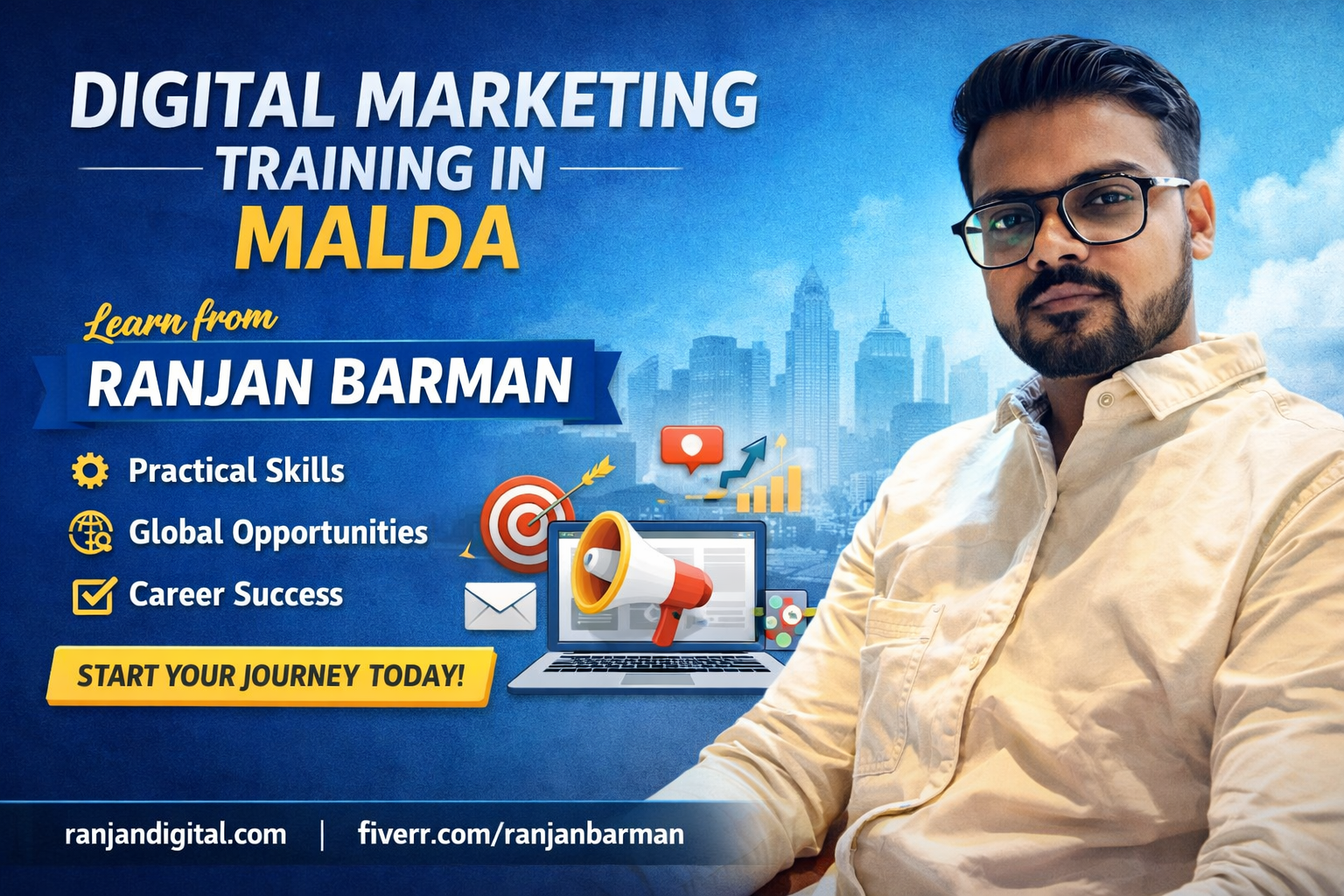
Mr. Ranjan Barman is a Pro Freelancer on Fiverr and an experienced digital marketing trainer who has helped students and business owners from across the world build successful online growth strategies. He delivers training and consulting through his global freelancing profile (fiverr.com/ranjanbarman) and his official platform, ranjandigital.com. With a career that began in 2018, Mr. Ranjan has worked with multiple renowned companies before founding Blogrator Web Service in 2022. Today, Blogrator is a fast-growing digital marketing company serving clients from the USA, Canada, the UK, Germany, and India. A Company Built on Training & Mentorship Blogrator is powered by a team of 30+ skilled professionals, many of whom started their careers as freshers. Under the direct mentorship of Mr. Ranjan—Founder & CEO—these individuals transformed from beginners into working professionals handling real international projects. This same industry-focused training approach is now available offline in Malda. Offline Digital Marketing Training in Malda Mr. Ranjan offers practical, career-oriented digital marketing training in Malda with one clear goal:to create future-ready professionals who can work with global companies or build their own careers in freelancing, jobs, or entrepreneurship. This training is designed not just to teach theory, but to prepare students for real-world work, live projects, and global opportunities. Vision of Blogrator Blogrator’s vision is to become a global outsourcing powerhouse for digital marketing, content creation, software development, and AI & automation services—delivered at affordable costs while maintaining high quality. At the same time, Blogrator aims to generate large-scale employment opportunities by nurturing skilled talent from Malda and across India. Your Opportunity Starts Here For ambitious students and young professionals in Malda, this is a unique opportunity to: Learn directly from a global freelancer and agency owner Gain practical, job-ready digital marketing skills Open doors to international freelancing, jobs, and long-term career growth Start your journey toward a global career—right here in Malda.

Read More

Content Creation Master SOP

Content Creation Master SOP Unified Guidelines for Rank Math & Yoast SEO Compliance For Internal Use Only 1. Professional Content Structure Blueprint Every article must follow this hierarchy to ensure scannability for users and “crawlability” for search engines. A. The Headline (H1) Requirement: Must contain the Primary Keyword. Ideally, place the keyword at the beginning. Power Words: Include at least one “Power Word” to boost CTR (e.g., Ultimate, Strategy, Essential, Proven, 2026 Guide). Length: Keep it between 50-60 characters. B. The Introduction (First 100 Words) The “10%” Rule: The Primary Keyword must appear within the first 10% of the article (First paragraph). The Hook: Start with a problem statement or an interesting statistic. The Promise: Clearly state what the user will learn (Search Intent). Avoid Fluff: Do not start with “In today’s digital world…” – get straight to the point. C. Subheadings (H2, H3, H4) Frequency: No block of text should exceed 300 words without a subheading. Optimization: At least one H2 must contain the Primary Keyword. Use H3s for Secondary Keywords or step-by-step breakdowns. D. Paragraphs & Sentence Length Paragraphs: Maximum 3-4 sentences (or 4-5 lines visually). Large text walls increase bounce rates. Sentences: Keep 70% of sentences under 20 words. (Use Hemingway Editor to check). 2. Keyword Strategy & Deployment We follow a strict protocol to satisfy Rank Math (scoring) and Yoast (readability/context). A. Keyword Types Type Definition Usage Rules Primary Keyword The main search term we want to rank for. Density: 1% to 1.5% (approx 10-15 times per 1000 words). Must appear in: H1, First Paragraph, one H2, URL, Conclusion. Secondary Keywords LSI terms, variations, or sub-topics defined in the brief. Use at least once naturally in the body or H3 headers. Purpose: Helps rank for long-tail queries. B. How to “Tweak” Keywords Professionally Stop Words Allowed: Google and SEO plugins are smart. Never sacrifice grammar for a keyword match. Brief Keyword: “content writing services london” ❌ Bad Usage: “We offer the best content writing services london.” (Grammatically incorrect). ✅ Professional Tweak: “We offer the best content writing services in London.” (Rank Math/Yoast will still recognize this match). 3. Tone, Grammar & Phrasing We write for humans first. Tools like Grammarly are mandatory, but human judgment is final. A. Professional Phrasing Guide Instead of (Weak/Casual) Use This (Professional/Authoritative) “A lot of people think…” “Many industry experts suggest…” “You need to make sure to check…” “It is crucial to verify…” “This is a good way to fix it.” “This approach effectively resolves the issue.” “The tool is really cheap.” “The tool is cost-effective / budget-friendly.” B. Readability Checks (Yoast Criteria) Passive Voice: Limit to less than 10% of total sentences. (Use active verbs: “The team created the report” NOT “The report was created by the team”). Transition Words: Use them in at least 30% of sentences (e.g., However, Therefore, Furthermore, In addition, Consequently). 4. Technical SEO Specifications A. Meta Description (The Ad Copy) Character Limit: Strictly 140 – 145 characters. Why? Anything over 155 is cut off by Google. We aim for 145 to be safe on mobile devices. Formula: [Problem/Hook] + [Solution with Primary Keyword] + [CTA]. Example: “Struggling with low traffic? Discover our proven SEO content tips to boost rankings fast. Read the full guide now.” (115 chars) B. URL Slug Short, lowercase, hyphen-separated. Must contain the Primary Keyword. Remove stop words (a, an, the, in, on). Good: domain.com/seo-content-checklist Bad: domain.com/here-is-the-checklist-for-seo-content-2026 C. Linking Strategy Internal Links: Include 2-3 links to our existing blog posts. (Context: “Check out our guide on [Topic]”). External Links: Include 1-2 links to high-authority, non-competitor sites (e.g., Wikipedia, Forbes, Statista, Official Google Blog). 5. Word Count Standards Adhere strictly to the word count assigned in your brief. Article Type Word Count Range Description Standard Blog 900 – 1000 words Focused on answering a specific question or covering a single topic clearly. Pillar Page / Guide 1600 – 2500 words Comprehensive, “Ultimate Guide” style. Covers “What, Why, How, Examples.” Custom Brief Specified (e.g., 600) Strict adherence to the requested count (±50 words tolerance). ✅ Final Submission Checklist Writers must verify every item before marking the task as “Complete.” 1. Quality & Grammar Grammarly Score 90+: No spelling errors or basic grammar faults. Professional Tone: No slang, no “I think,” no fluff. Readability: Paragraphs are short (max 4 lines). Sentences are punchy. 2. SEO & Keywords Primary Keyword in H1 & Intro: It appears in the title and first 100 words. Keyword Density: Primary keyword appears approx 10-15 times (for 1000 words). Secondary Keywords: Used naturally at least once (preferably in H3). Meta Description: Exactly 140-145 characters. Includes keyword + CTA. 3. Structure & Formatting Subheadings: Content is broken by H2s and H3s every 300 words. Links: 2+ Internal links and 1+ External link included. Image Alt Text: Describes the image and includes the keyword where relevant. Generated for the Content Team Strategy | By Debjit (Sr. Content Manager @Blogrator)

Read More

Technical SEO Problem Fixing to Unlock Hidden Traffic Growth

Search engines never see your website the way your visitors do. They do not feel your design, colors, or branding first. Instead, they read code line by line, follow internal links, test how fast each element loads, and measure how smoothly users move through every page. They evaluate structure, speed, and stability before they reward your content. When the technical foundation breaks, even the strongest content and the best backlinks stop working because search engines struggle to crawl, index, and trust your site. That is why Technical SEO Problem Fixing acts like a hidden growth lever. You remove invisible barriers, restore a clean technical structure, and give your existing pages a fair chance to compete. What Technical SEO Really Takes Care Of Technical SEO focuses on how your website works under the hood. You deal with structure, performance, and crawlability rather than only keywords and content. When you focus on technical issues, you usually: Make it easy for search engines to crawl and index pages. Improve loading speed and Core Web Vitals. Strengthen mobile experience across devices. Clean up URL structure and internal links. Add helpful structured data for search engines. Because you treat each item as a fixable problem, you turn a confusing, slow site into a clean, fast, and easy-to-index asset. As a result, your content stands a much better chance of ranking and converting. Learn more about local SEO strategies. Hidden Technical Errors That Drain Your SEO Performance Small technical issues often stay hidden, yet they quietly hurt rankings and user experience. Slow Pages Reduce Engagement: Slow loading pushes users away and sends negative signals to search engines. Broken Links Block Crawling: Broken internal links hide key pages and waste valuable crawl budgets. Duplicate URLs Confuse Search Engines: Duplicate or redirected URLs split ranking power and weaken visibility. Poor Mobile Layouts Lose Visitors: Weak mobile design drives users away and damages overall performance. Missing Structured Data Limits Reach: Without structured data, your pages lose clarity and miss rich search features. By removing these hidden errors, you protect your SEO performance and give your best pages a fair chance to rank. A Step-by-Step Framework for Technical SEO Problem Fixing You need a clear process when you fix technical SEO issues; otherwise, you end up guessing and wasting effort. This simple framework helps you move in sequence, from diagnosis to refinement, so every change you make supports real visibility and traffic gains. A) Run a Clear, Actionable Technical SEO Audit You start with a structured audit because you cannot fix what you cannot see. You crawl the entire site, check index coverage, review speed and Core Web Vitals, and inspect robots and sitemap settings. You also scan internal links and click depth from the homepage.  B) Fix Crawlability and Indexing First You handle crawling and indexing early because search engines must find and understand pages before they can rank them. You clean the robots file, generate a fresh sitemap, and remove or redirect broken URLs with proper 301s. You add consistent canonical tags and update internal links to the best version of each page. C) Improve Speed and Core Web Vitals You treat performance as a top priority because visitors expect fast pages and search engines reward them. You compress and resize images, minify CSS and JavaScript, and remove heavy, unused scripts and plugins. You enable caching and use stable, reliable hosting to keep response times low.  D) Strengthen Mobile Experience and Site Structure You recognize that most users arrive from mobile devices, so you take mobile layouts seriously. You use responsive designs, keep menus simple, and place buttons and forms where thumbs reach them easily. You remove intrusive elements that cover content and distract visitors. You also refine information architecture so people and search engines follow clear, logical paths. E) Add Structured Data and Security Enhancements You move into refinement after stabilizing crawling, indexing, speed, and structure. You implement structured data for services, products, local business details, and FAQs where they fit. You enforce HTTPS across the entire site and redirect every HTTP version to the secure one.  When you follow this framework, you stop treating technical SEO as random fixes and start using it as a controlled, repeatable process. As a result, your site becomes faster, clearer, and more search-friendly, and every new campaign you launch stands on a much stronger foundation. Conclusion Technical SEO never replaces strategy, content, or creativity. However, it supports all three. When you commit to ongoing Technical SEO Problem Fixing, you protect your rankings, safeguard your user experience, and unlock traffic that your current content already deserves. You create clear paths for search engines, deliver fast and secure pages for users, and remove invisible barriers that once blocked growth. Over time, those improvements translate into more reliable visibility, stronger brand trust, and better conversions. For businesses that want to combine technical discipline with practical growth strategies, Blogrator Web Service encourages a long-term partnership mindset. FAQs What makes technical SEO different from on-page SEO? Technical SEO improves how your site works behind the scenes, including crawling, indexing, speed, security, and structure. On-page SEO improves visible elements like headings, copy, images, and internal links. Both work together to boost rankings. How often should I audit my site for technical issues? You run a full technical audit at least once every quarter. You also perform smaller checks after major updates, redesigns, or migrations to catch issues early. Can non-technical teams handle Technical SEO Problem Fixing? Non-technical teams handle basic tasks such as sitemaps, simple redirects, and image compression. However, specialists usually manage complex speed fixes, large URL changes, and advanced structured data. How do I measure the impact of technical SEO work? You track crawl errors, index coverage, speed scores, and Core Web Vitals. You also monitor impressions, clicks, rankings, engagement, and conversions to see how technical fixes support real traffic growth.

Read More

Small Business Marketing Tips: A Quick Guide to Boost Your Brand

Marketing is essential for small businesses looking to grow and succeed, but with limited resources and tough competition, standing out can be challenging. The secret is in choosing the right strategies at the right time. In this guide, we’ll share practical small business marketing tips that will help you attract customers and build long-lasting loyalty. Whether you’re just starting or refreshing your current strategy, these simple and effective tips will give your marketing efforts a real boost. Understand Your Audience Like Never Before Understanding your audience is the foundation of any effective marketing plan. Start by creating buyer personas—detailed profiles of your ideal customers based on research and data. Consider these key questions: What problems are they trying to solve? Where do they spend their time online? What values do they care about? By identifying these groups, you can tailor your marketing to address their specific needs, which will increase engagement and help you connect with them more effectively. Craft a Compelling Online Presence Having a professional and approachable online presence is crucial for small businesses. But there’s more to it than just that. Your website should also be: Mobile-friendly: With more people browsing on mobile devices, your site must look great and work seamlessly on phones and tablets. Optimized for speed: Slow-loading websites can drive visitors away, so make sure yours loads quickly to keep people engaged. Clear and informative: Ensure that visitors can easily find what they need within seconds. Building a website isn’t just about putting up a page; it’s about crafting an experience. A well-designed, straightforward website can turn casual visitors into loyal customers. Leverage the Power of Content Marketing Content marketing goes beyond just blogging—it’s about sharing your brand’s story in a way that informs, entertains, and adds value for your audience. Here are a few content ideas to help boost your brand: How-to guides: Provide solutions to common problems your audience faces. Behind-the-scenes videos: Show the people and processes behind your business to create a personal connection. Customer success stories: Highlight real-life examples of how your products or services have made a positive impact. This not only promotes your product but also offers practical tips, showing your audience that they’re gaining value from you beyond just a purchase. Master Social Media for Small Business Growth Social media is not just a place to post updates—it’s a powerful tool for building a community and creating strong, lasting relationships with your customers. Here’s how to maximize your social media efforts: Choose the right platforms: Don’t be everywhere. Go where your audience is—LinkedIn for pros, Instagram or TikTok for younger crowds. Post consistently: Create a content calendar and stick to a regular posting schedule. Consistent content keeps your brand in the minds of your audience. Engage with your followers: Interact with your audience by responding to comments, messages, and mentions. It shows that you genuinely value your customers and their feedback. These tools allow you to engage with your audience in an authentic, unpolished way, which can be more relatable and appealing. Supercharge Your Visibility with SEO When people search for services or products, you want your website to be at the top of the results. Here are some key SEO strategies to boost your visibility: Keyword research: Identify the keywords your target audience is searching for and use them in your website copy, blog posts, and meta descriptions. On-page optimization: Make sure your images, headings, and URLs are optimized to match relevant search queries. Backlinks: Build quality backlinks by collaborating with other reputable websites in your industry. Backlinks signal to Google that your site is trustworthy and authoritative. By crafting content around these terms, you’ll improve your chances of appearing in search results when people look for related services. Learn more about social media marketing for small businesses. Measure, Learn, and Improve What’s the point of marketing if you don’t know what’s working? Analytics tools like Google Analytics and Facebook Insights are essential for tracking the success of your campaigns. By analyzing the data, you can: Identify high-performing content: Understand what’s resonating with your audience and driving engagement. Adjust your strategy: If certain ads aren’t yielding results, tweak your messaging or targeting to improve performance. A/B testing: Test different versions of a campaign to see which one performs better and yields the best results. Don’t hesitate to adjust your strategy based on the insights you gather, and use data to make informed decisions that improve your marketing efforts. Make Life Easier with Automation Tools As a small business, you likely don’t have the time to manage every task manually. That’s where automation can be a game-changer. Use automation tools to streamline repetitive tasks and save valuable time, such as: Email marketing: Automate your email campaigns using platforms like Mailchimp or HubSpot, so you can reach your audience without manual effort. Social media scheduling: Tools like Buffer or Hootsuite allow you to schedule posts in advance, ensuring consistency without having to post in real-time. CRM software: Automate your customer relationship management (CRM) to easily track leads, sales, and customer interactions, keeping everything organized. With automation, you can stay connected with your audience even when you’re not online, essentially giving you a marketing assistant working for you 24/7. Conclusion By implementing these Small Business Marketing Tips, you can lay a strong foundation for your brand and begin seeing meaningful growth. Each tip is practical, designed to help you build lasting relationships with your audience, enhance brand awareness, and boost conversions. If you need expert assistance with improving your online presence or managing your digital marketing efforts, visit Blogrator Web Service. They specialize in helping small businesses optimize their websites and marketing strategies to drive results.

Read More

Master WordPress Elementor Basics to Design Profitable Business Websites

DEvery serious business today needs a website that does more than sit online. Your site must attract the right visitors, explain your offer clearly, and turn interest into real revenue. When you work with WordPress and Elementor together, you control that entire experience without writing code. You use a visual editor, you shape every section, and you design pages that guide visitors toward action. However, you only get those results when you strategically understand the WordPress Elementor Basics. You do not just drag random blocks around. This approach turns your website from a digital brochure into a profit-focused asset. Why Beginners Love Building with Elementor Elementor gives new users a simple, visual way to turn ideas into real, working pages. Elementor lets you design visually in real time, so you always see exactly how your page will look. It helps businesses create sites that load quickly, look great on mobile, and guide visitors toward decisive action. You adjust margins, fonts, and sizes for desktop, tablet, and mobile, keeping sections readable and clickable for visitors. Elementor integrates with themes, WooCommerce, and marketing tools, so you can connect forms, email, and analytics without touching code. As a result, beginners launch professional, conversion-ready websites faster and with much more confidence. What WordPress and Elementor Actually Do for Your Business WordPress acts as the engine of your website. It manages your pages, blog posts, users, and plugins. You install themes and extensions, and you control everything from one dashboard. This system gives you flexibility and keeps your content separate from design, so you update text without breaking layouts. Elementor then sits on top as a visual builder. You open any page, click Edit with Elementor, and start working in a live preview. Drag sections, columns, and widgets onto the canvas. You change text, colors, and spacing in real time. Because you see every change immediately, you move quickly and make confident design decisions. In addition, Elementor gives you device controls. You switch between desktop, tablet, and mobile views. You adjust font sizes and margins for each one. As a result, your pages stay easy to read and navigate on any screen, which helps visitors stay longer and engage more. Key Elements of a High-Converting Elementor Homepage A high-converting WordPress Elementor Basics follows a simple, clear structure. Each section has one job: move visitors closer to taking action. A) Build A Focused Hero Section Start with a focused hero section that states your main promise in one clear sentence. Support the headline with a short line that explains who you help and what changes. Highlight a single primary button that guides visitors toward your most important next step today. B) Show Your Core Services Clearly Present your core services in neat columns so visitors can quickly scan what you offer. Use an icon, title, and benefit statement to keep each service description clear and readable. Avoid long paragraphs here and focus on clarity, simplicity, and fast understanding for every visitor. C) Add Social Proof and Authority Add a social proof section featuring testimonials, reviews, or recognizable client logos near important content. Choose quotes that mention results like higher revenue, saved time, or smoother systems for clients.  D) Explain Why Visitors Should Choose You Include a concise section explaining why clients should choose your business instead of nearby competitors. Highlight strengths like years of experience, specialized skills, or a deep understanding of specific client industries.  E) Close with A Strong Final Call to Action End the page with a focused final section that repeats your primary call to action. Link this call directly to a simple form, booking calendar, or preferred communication channel online. Avoid extra buttons here so visitors stay clear about the one next step that matters. With these elements in place, your Elementor homepage feels intentional, easy to follow, and far more likely to turn visitors into real leads or customers. Learn more about High-Converting WordPress Website Design. Common Mistakes When Using Elementor for Business Sites Even with solid WordPress Elementor Basics, you still need to avoid a few common errors. Avoid cluttered styling: You do not overload pages with too many fonts or colors, because that quickly makes layouts feel messy and unprofessional.  Always check mobile view: You do not ignore mobile layouts, since many visitors browse on phones and tablets every day.  Use effects with restraint: You do not rely only on animations or fancy effects to impress visitors or hide weak content.  Test every page interaction: You do not skip basic testing before you publish an Elementor page or funnel.  When you avoid these mistakes, you protect both the user experience and your conversion rates. Conclusion When you truly master WordPress Elementor Basics, you move far beyond simple drag-and-drop design. You combine a clear business goal, a structured page layout, and a focused funnel that guides visitors toward meaningful action. You use Elementor to support that plan with a clean, responsive design, and you connect everything to tracking and follow-up systems that turn clicks into clients. If you want expert support that brings technology, strategy, and design together in one growth-focused approach, you can collaborate with a specialist company like Blogrator Web Service to scale your website into a reliable profit engine. FAQs Do I need design experience to use Elementor? No. You only need a basic sense of layout and a simple content plan. Elementor’s ready-made sections and widgets do the heavy lifting. Can I build a full business website with Elementor and WordPress? Yes. Manage content in WordPress, design pages with Elementor, and use a few trusted plugins for security, backups, and analytics. How do I keep my Elementor pages fast and responsive? You use a lightweight theme, compress images, avoid unnecessary addons, and test layouts on different devices with Elementor’s responsive controls. When should I move to more advanced layouts? You upgrade when you run specific campaigns or funnels, need dedicated landing pages, or want deeper automation and integrations.

Read More